
Flexibility is a top consideration for job seekers when considering new job opportunities as more companies complete their return-to-office plans. Robert Half’s new research and Demand for Skilled Talent report shows that hybrid working remains a top choice for many professionals, while sharing more important information.
Most Employers Offer Some Form of Hybrid Work

The 2026 benefits survey by Robert Half states that 88% of employers provide some form of hybrid working, with one quarter of which applies to everyone. This indicates that workplace flexibility is no longer a short-term trend, but rather is a key consideration for companies to stay competitive in hiring and retaining talent.
Hybrid Work Is the Top Choice for Job Seekers

Overall, over 50% of the professionals polled by Robert Half indicated that they would prefer to work remotely and in the office. There is a nearly equal split between those who would prefer 1 or 2 office days and those who would prefer 3 or 4.
Fully In-Office Jobs Are Less Popular
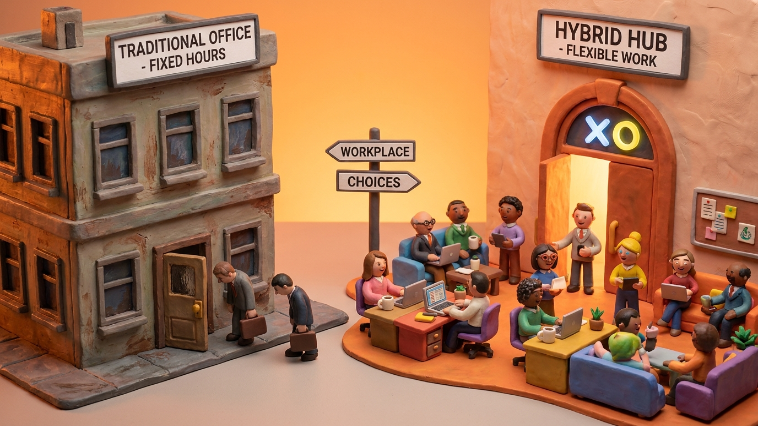
Professionals said that they would prefer in-office positions fully, and other mature professionals consider positions where they need to work five days per week in the office. This is an indication that many employees continue to cherish flexibility and view employers that provide them with options to the traditional office hours as valued.
Flexible Work Can Improve Retention

Companies are finding it easier to keep employees by embracing flexibility. According to Robert Half, 47% of professionals who are not actively searching for jobs cited their current level of flexibility as a reason for staying. Providing remote or hybrid work arrangements can help lower employee turnover and boost employee satisfaction.
More Workers Are Considering Job Changes

Robert Half found that 38% of professionals are already looking or planning to look for a new position in early 2026. Compensation, workplace culture, and flexibility are becoming more critical for employers to attract candidates as they are increasingly faced with more competition for talent.
Hybrid Roles Outnumber Fully Remote Positions

Flexible jobs still exist, but hybrid opportunities are much more common than fully remote ones. In the first quarter of 2026, 19% of postings offered hybrid schedules, while only 4% were fully remote. Workers seeking remote roles may encounter stronger competition.
On-Site Roles Are Becoming More Common Again

The number of jobs that require full in-person presence is growing as return-to-office policies grow. 77% of all new postings in Q1 2026 called for in-person work, according to Robert Half. While flexibility can still be offered, the labour market is slowly moving away from the pandemic-era arrangements.
Senior Professionals Have More Access to Flexibility

Hybrid and remote jobs are most prevalent among workers with five or more years of experience. Employers readily provide more flexibility to seasoned experts who have specialized skills and require less supervision, and are able to work independently across teams & projects.
Entry-Level Workers Have Fewer Remote Opportunities

Many employers like to have new employees on-site for the training, mentoring, and working together. The more experience and skills that employees acquire, the more opportunities will become available to work remotely or in a hybrid role.
